What to Wear When You Have Nothing to Wear (2026 Guide)
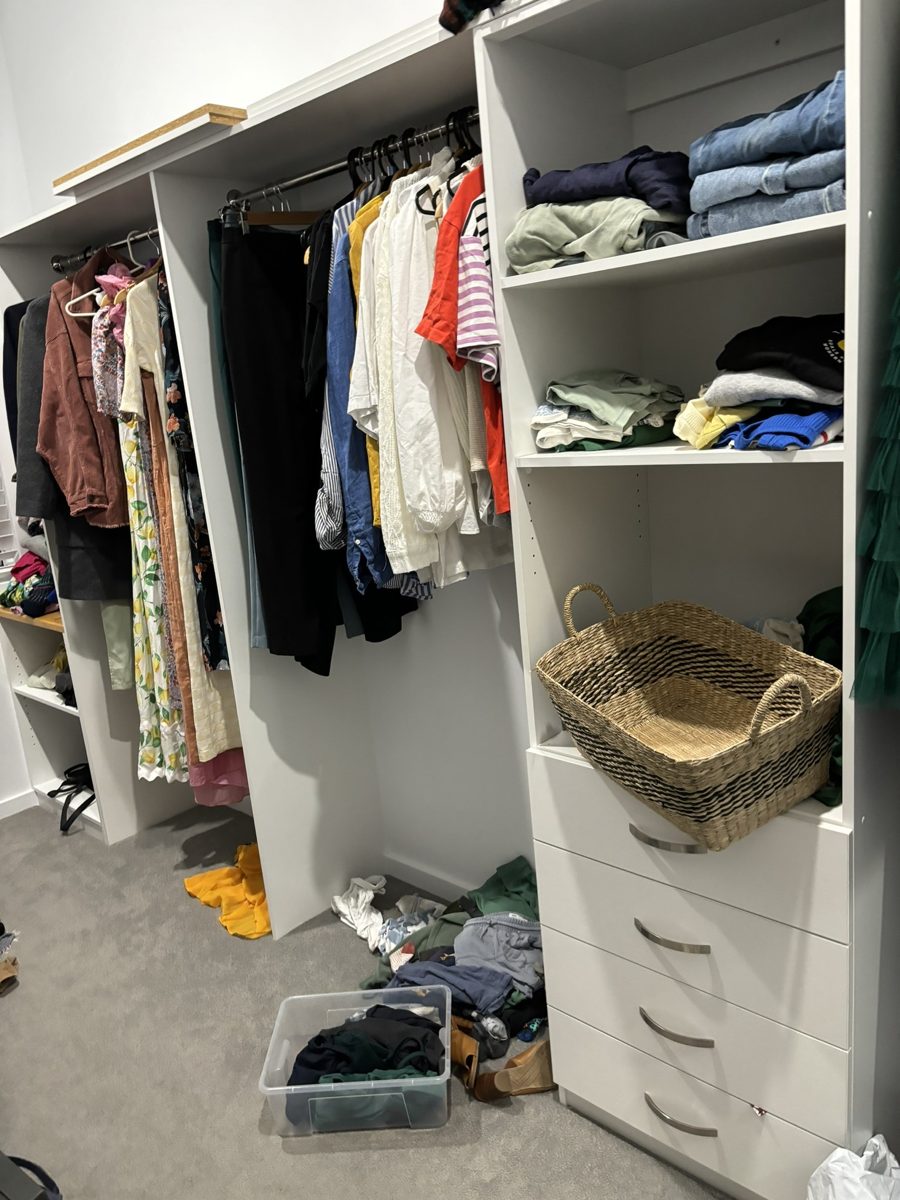
"I have nothing to wear" is the thought going through so many of our heads, usually while we stand in front of a closet that is full. If that is you, you are not being dramatic, and you are in very good company. The people who track this properly see it everywhere. Indyx looked at 10 million digitized items in 2025 and found the average wardrobe holds 166 pieces, and a quarter of them went a full year without being worn once (Indyx, State of Our Wardrobes 2025).
So the feeling is real, but it is not about quantity. Most of us own plenty. What is missing is the connection: clothes that work with each other, and with the day you are actually about to have.
That is good news, because a connection problem is far cheaper to fix than a shopping problem.
The short version
When you have nothing to wear, build one outfit in this order: shoes for the day, your most reliable pants or skirt, the plainest top that goes with them, and one third piece like a blazer, cardigan or jacket. Then stop and leave.
The feeling rarely means you are short on clothes. It comes from pieces bought for one occasion, too many tops, clothes that no longer fit your body or your week, and a closet you cannot see properly. The lasting fix is to count the outfits you can already make, and buy only the piece that connects the most of them.
Why your closet is full but you have nothing to wear
There are seven common causes. Most people have two or three of them at once, which is why one tidy up never quite fixes it.
1. You bought for a moment, not for a wardrobe
The top for the birthday. The dress for the wedding. Each one made sense on the day, and each one needs a specific partner you never bought. If a piece only works with one other item, it is not part of your wardrobe. It is a costume waiting for its event.
2. You own ten of the same thing
Indyx found the average wardrobe holds 68 tops. Tops are the easiest thing to buy and the hardest thing to turn into a new outfit, because a new top on the same pants looks like the same outfit. Most "nothing to wear" wardrobes are top heavy and short on the bottoms, layers and shoes that actually change a look.
3. Your wardrobe is dressed for an old life
You changed jobs, moved cities, had a baby, started working from home. Your clothes did not get the memo. You are now dressing a Tuesday that no longer exists, which is why everything feels slightly wrong even when it fits.
4. Things do not fit your body right now
Too tight, too loose, too short, needs a button. These pieces sit in the wardrobe as a quiet reminder, and you skip past them every morning. They count toward the full feeling but never toward an outfit.
5. You cannot see what you own
If it is folded at the back, under something, or in another room, it does not exist at 7am. Half of a wardrobe audit is simply rediscovering things.
6. You remember the outfit, not the options
You wore the black pants with the cream knit once, it worked, and now that is the only thing those pants do. Every piece gets locked into its first good outfit. The wardrobe can make far more combinations than you ever try.
7. Decision fatigue at the worst time
You are choosing in a rush, often tired, sometimes with weather and three different plans for the day. Too many options and too little time feels exactly like no options at all.
What to wear when you have nothing to wear: the 10 minute outfit formula
If you are reading this while late, do this. It works because it removes choices instead of adding them.
- Start with the shoes. Pick the shoes the day actually needs: walking, standing, rain, office. Shoes rule out more outfits than anything else, and that is exactly what you want right now.
- Pick one bottom that works with those shoes. Your most worn pants, jeans or skirt. Not the interesting one. The reliable one.
- Take the plainest top that goes with it. A tee, a knit, a shirt. Plain is the point.
- Add one third piece. A blazer, a cardigan, a coat, a belt, a scarf. This is what turns clothes into an outfit, and it is the step most people skip.
- Check it in a full length mirror once. Then leave. Do not try a second option. The second option is where the morning goes.
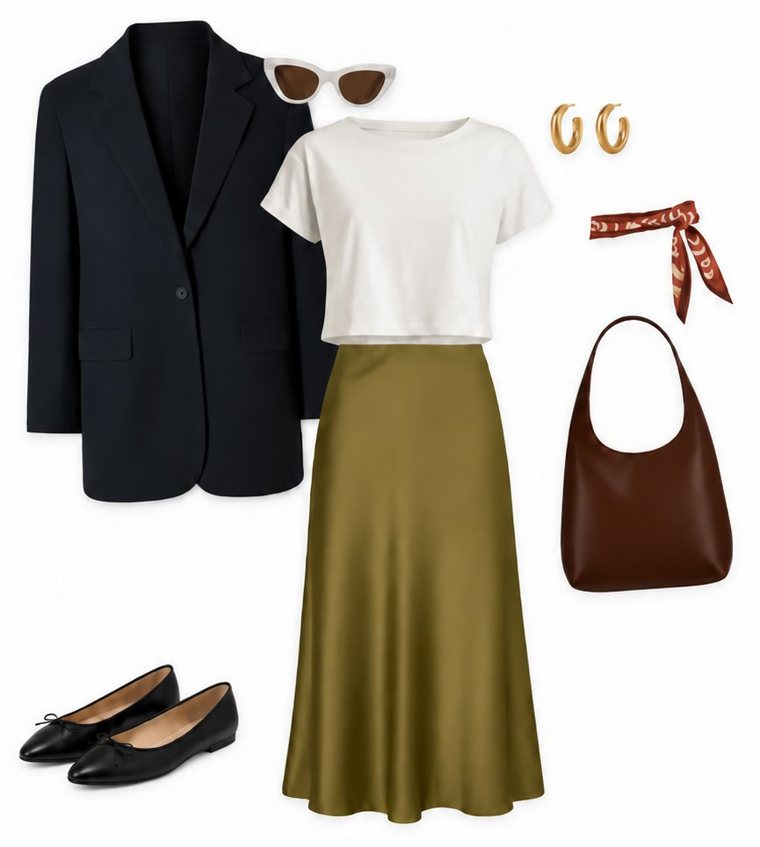
If even that fails, wear your uniform: the last outfit someone complimented. Repeating an outfit is not a failure. It is a decision you already made on a better day.
Or ask your chat. If your wardrobe is connected, a prompt like this gets you dressed from what you own:
I have nothing to wear today. It is 57 degrees and I have work then
dinner. Use only clothes from my wardrobe. Give me two outfits,
starting from shoes I can walk in. Do not suggest anything to buy.
If you do not have your wardrobe connected yet, you can add it with Modebase.
How to stop having nothing to wear (the weekend reset)
The ten minute fix gets you out the door. This gets you out of the loop. Give it one afternoon.
Step 1: Take everything out and sort it into four piles
- Wear: fits, you like it, you wore it this season
- Fix: needs a hem, a button, a clean, a tailor
- Maybe: fits but you never reach for it
- Go: does not fit, does not suit, you would not buy it again
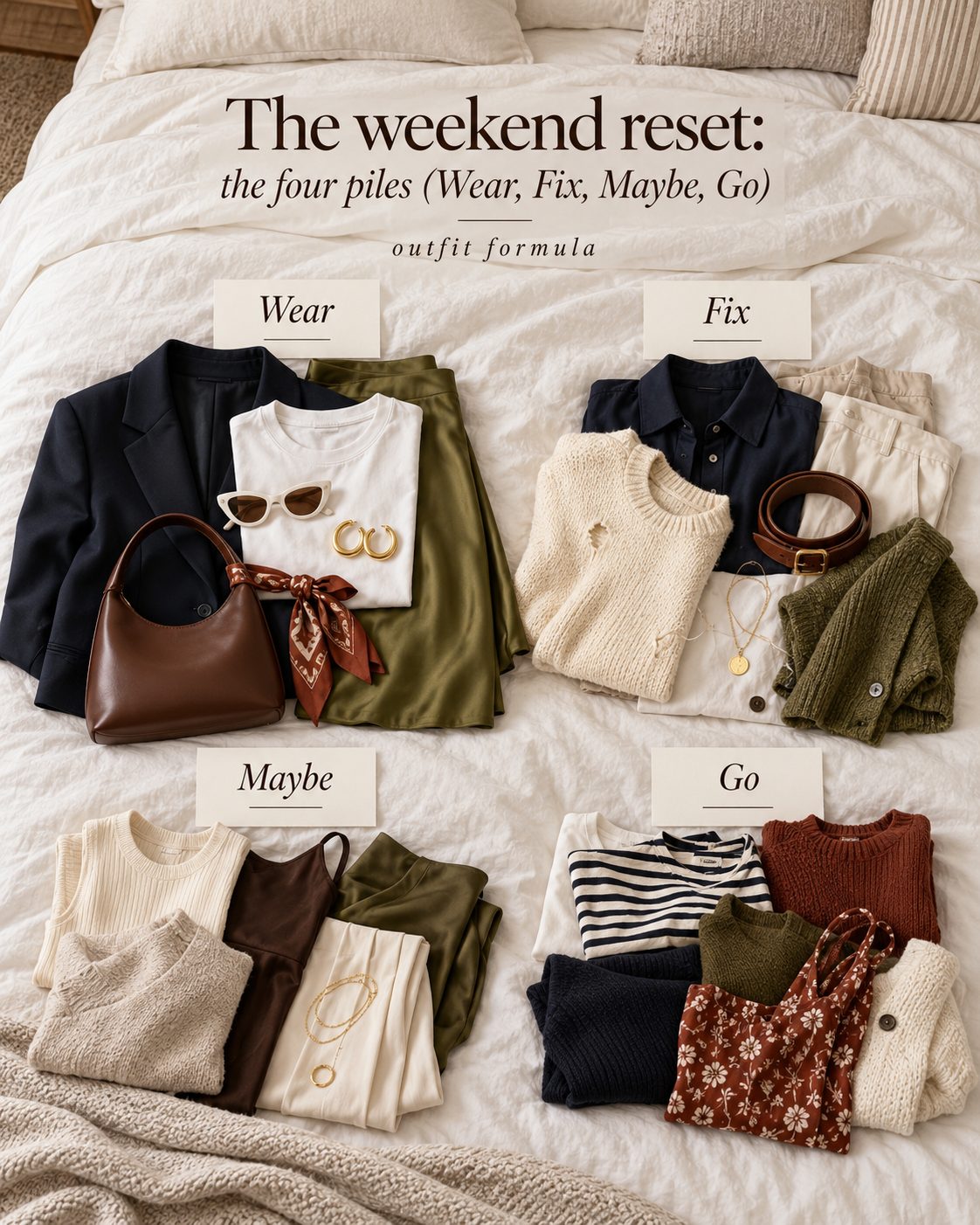
The Maybe pile is the important one. It is where the free outfits are hiding.
Step 2: Write down your week in hours
Not "I work and go out sometimes." Write the real week: three office days, two at home, Saturday errands, one dinner out every two weeks. A gap only matters in proportion to how often you land in it. Being stuck once a quarter is a hire. Being stuck three days a week is the real problem.
Step 3: Count outfits per occasion
For each part of your week, count how many complete outfits you can make from the Wear pile. You will find one occasion with plenty and one with almost nothing. The thin one is your actual "nothing to wear" moment. It is usually not the dressy end. It is the ordinary day you dress for most and think about least.
Step 4: Try the Maybe pile against the thin occasion
Before you decide anything is missing, try every Maybe piece in the thin occasion with things you already wear. Expect two or three to suddenly work. That is a new outfit for nothing.
Step 5: Only then, name the gap
If an occasion is still thin, describe what is missing as a job, not a product. "Something that makes my jeans work for the office" is a useful brief. "A blazer" sends you home with a blazer that matches nothing. Buy the one piece that unlocks the most outfits, then stop.
Our wardrobe audit guide walks through steps 2 to 5 in detail, with prompts that count the outfits for you.
Why the feeling keeps coming back
A weekend reset is a photograph. It is true on the day you do it, then you buy something, a season turns, and the gaps move. Three months later you are back in front of the wardrobe with the same feeling.
The fix that lasts is visibility. When you can see every piece you own and how often you actually wear it, the "nothing" goes away, because the options are right there and you can see which ones you keep skipping. Indyx reported that close to 60% of its users say they buy clothes more slowly since starting a digital wardrobe (Pre-Loved interview with Indyx).
That is what Modebase is for. You add your clothes once, connect it to ChatGPT or Claude, and the chat you already use can see your real wardrobe. "What do I wear tomorrow" gets an answer from your clothes, not a list of things to buy. Wear history builds up on its own, so the next time you think you have nothing to wear, you can ask which pieces you have not worn in two months and get dressed from that.
New to the idea? Start with Can ChatGPT see my wardrobe? or How to get ChatGPT to pick your outfit.
Frequently asked questions
Why do I feel like I have nothing to wear when my closet is full?
Because your clothes do not combine into outfits for the life you have now. Pieces bought for single events, too many tops, clothes that do not fit, and clothes you cannot see all add to the full feeling without adding outfits.
What should you wear when you have nothing to wear?
Start with the shoes the day needs, add your most reliable bottom, the plainest top that goes with it, and one third piece such as a jacket or cardigan. Do not try a second option. If that fails, repeat an outfit that has worked before.
Is "I have nothing to wear" a sign I need more clothes?
Rarely. Indyx data from 2025 shows the average wardrobe has 166 items and a quarter go unworn for a year. More clothes usually make the feeling worse, because they add decisions without adding connections.
How many clothes do I actually need?
There is no right number. What matters is how many outfits you can make for each part of your week. Someone with 40 well connected pieces often has more to wear than someone with 200 pieces bought one at a time.
How do I stop buying clothes I never wear?
Before you buy, name three outfits the piece would make with things you already own. If you cannot, it is not filling a gap. Track what you wear for a month first, so you buy for your real week rather than the week you imagine.
Can AI help when I have nothing to wear?
Yes, if it can see your actual clothes. A general chatbot will suggest things to buy. A connected wardrobe like Modebase lets ChatGPT or Claude build outfits only from what you own, check the weather, and point out pieces you have not worn lately.