What is sustainable fashion?
Sustainable fashion means getting dressed in a way that does less harm to the planet and the people who make our clothes, and the biggest lever is simply wearing what you own for longer.
Searches for "what is sustainable fashion" have surged this year, and it is easy to see why. The term is everywhere, on swing tags, in ads and on brand websites, but rarely explained.
In plain terms, sustainable fashion covers three things:
- Environmental impact: the water, energy, chemicals and waste that go into making, washing and throwing away clothes.
- Social impact: fair pay and safe conditions for the people who grow the fibres and sew the garments.
- How we use clothes: buying less, wearing things more, and keeping them out of landfill for as long as possible.
That last one is the part you control most, and the part brands talk about least.
Why it matters, in numbers
Australia has one of the biggest clothing habits in the world, and most of it ends up in the bin.
- 27kg a year. Australians buy an estimated 27kg of new clothing and textiles per person each year, more than double the global average and second only to the United States.
- 56 new items. That works out to around 56 new pieces of clothing per person, per year.
- 800,000 tonnes. Roughly that much textile waste goes to Australian landfill each year, where synthetic fibres can take hundreds of years to break down.
- Up to 20% less impact. UK research by WRAP found that keeping clothes in use for just nine months longer can cut their carbon, water and waste footprints by up to 20%.
That last number is the important one. You do not need to buy a single "eco" product to make a real difference. Wearing what you already own for longer is one of the most effective changes there is.
What sustainable fashion actually looks like
The most useful way to think about it is as a ladder. Illustrator Sarah Lazarovic called it the "Buyerarchy of Needs": start at the top and only move down when the step above cannot solve the problem.
- Use what you have. Restyle, rewear and rediscover pieces already in your wardrobe. This is the most sustainable option by a long way, and it is free.
- Repair and care. Fix the hem, replace the button, de-pill the knit, wash on cold and air dry. Good care keeps clothes in rotation for years.
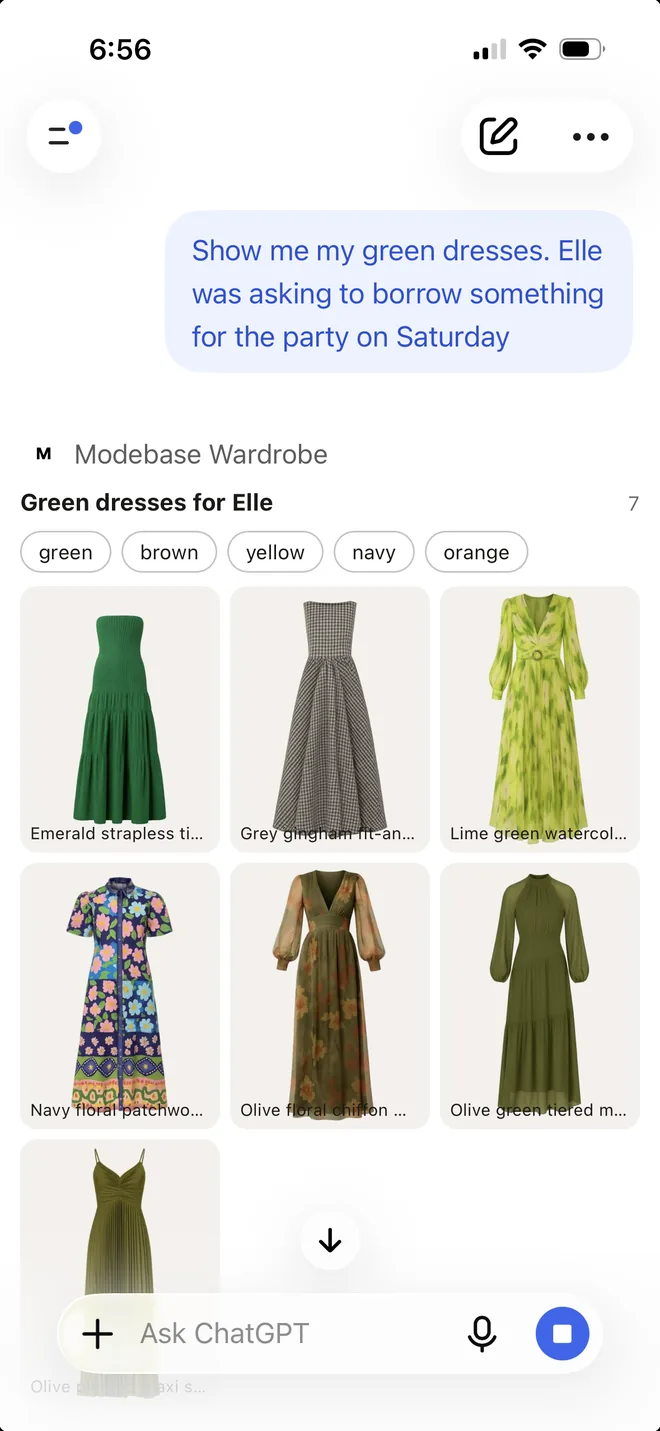
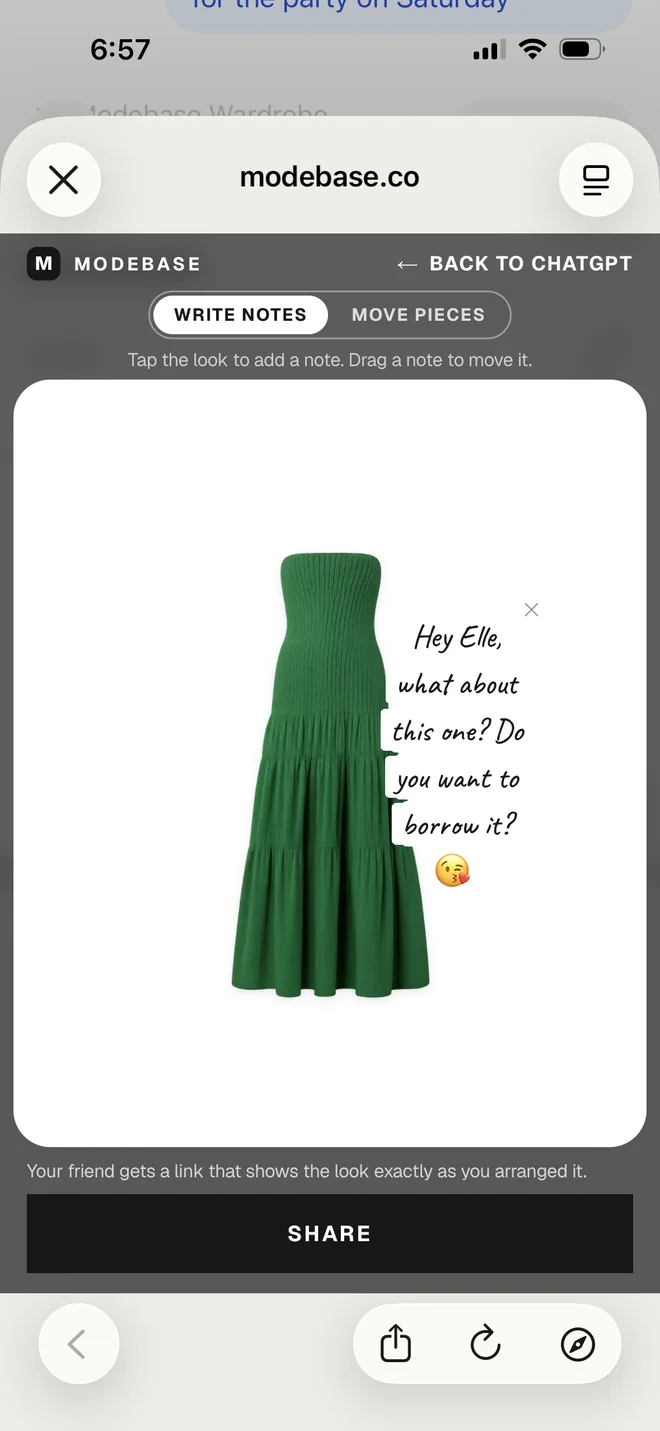
- Borrow or rent. For one-off events like weddings and formals, borrow from a friend or use a rental service.
- Swap. Clothing swaps with friends or local community swaps refresh your wardrobe at zero cost.
- Buy second-hand. Op shops, consignment stores and resale apps give clothes a second life.
- Buy new, carefully. When you do buy new, choose pieces you will wear often, in durable fabrics, from brands that are transparent about where and how they make things.
Most conversations about sustainable fashion start at step 6. The biggest gains are at step 1.
Spotting greenwashing
Greenwashing is when a brand makes itself sound more sustainable than it is. In Australia, the ACCC has been actively cracking down on misleading environmental claims, but plenty still slip through. Be sceptical of these:
| Claim | Why to be careful | What to look for instead |
|---|---|---|
| "Eco-friendly" or "conscious" | No legal definition, so it can mean almost anything | A specific claim you can check |
| "Sustainable collection" | Often a small range alongside a much larger fast fashion business | What the brand does across everything it sells |
| "Made with recycled materials" | May be a small percentage of the fabric | The actual percentage on the care label |
| "Recycle your old clothes with us" | Often paired with a discount to buy more | Whether the scheme reports what actually happens to the clothes |
| "Carbon neutral" | Usually relies on offsets, not reduced emissions | Reduction targets and progress reports |
The simplest test: a brand that wants you to buy more, more often, is not a sustainable brand, whatever the swing tag says.
Five things to do this month
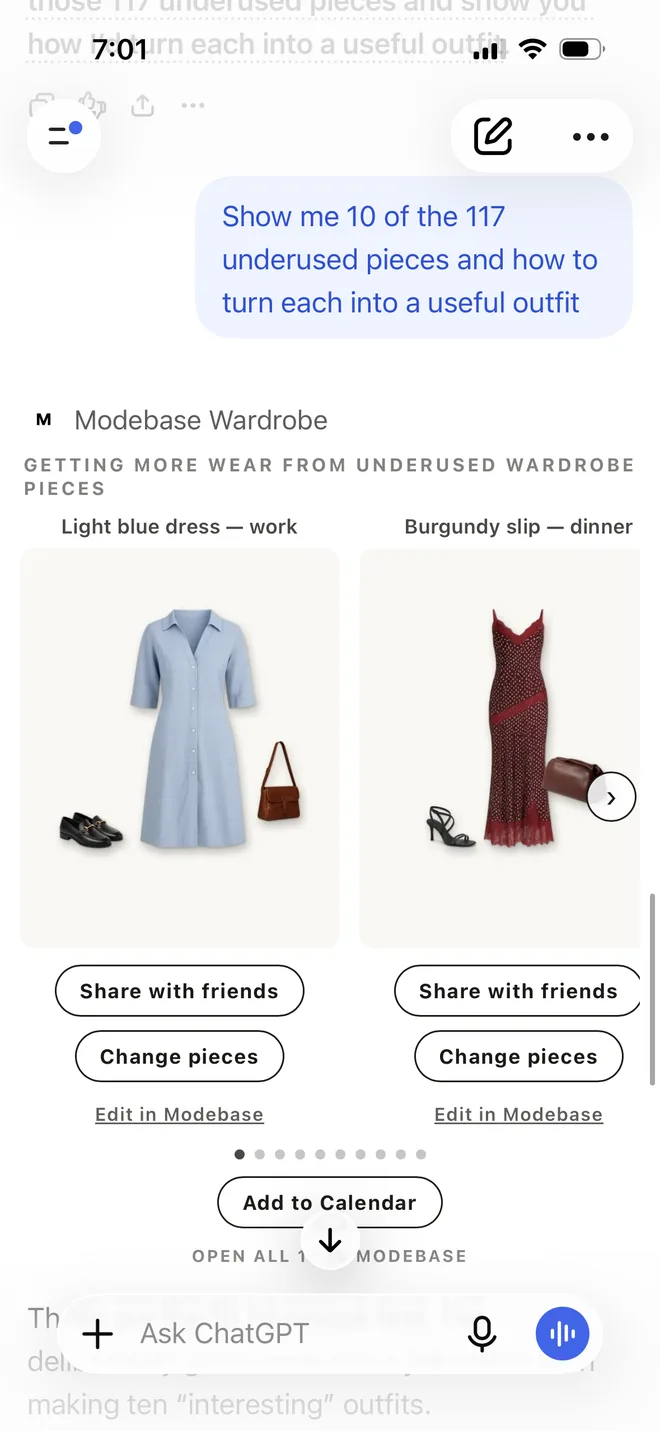
- Shop your wardrobe first. Pull out five pieces you have not worn in six months and build one new outfit around each.
- Work out your cost per wear. Divide what a piece cost by how many times you have worn it. It quickly shows you which pieces earn their place. Our guide on how to calculate cost per wear explains how.
- Try a 30 day no-buy. Not forever, just long enough to notice what you actually miss.
- Fix one thing. That jacket with the missing button or the jeans with the dropped hem. Repair it and wear it.
- Build a capsule. A capsule wardrobe built from what you own shows you exactly what you have and what, if anything, is missing. See our guide: what is a capsule wardrobe (and how to build one from what you already own).
The most sustainable wardrobe is the one you already own
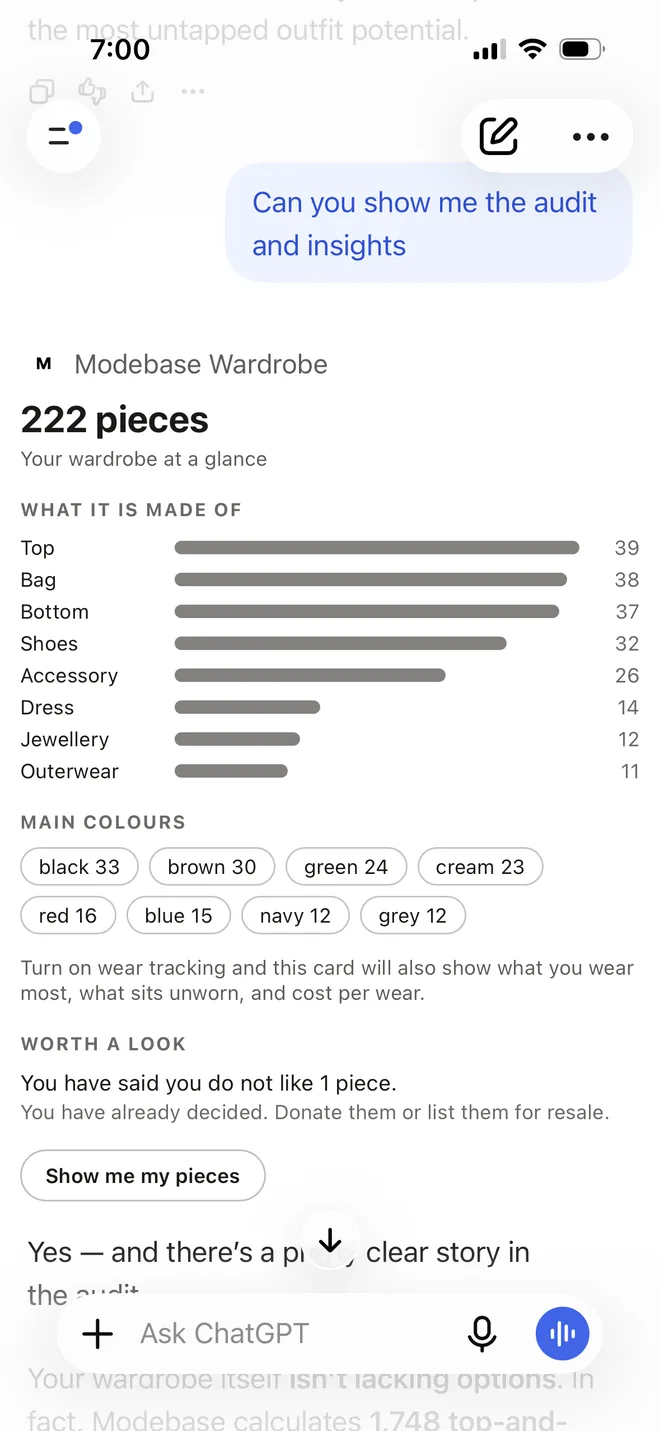
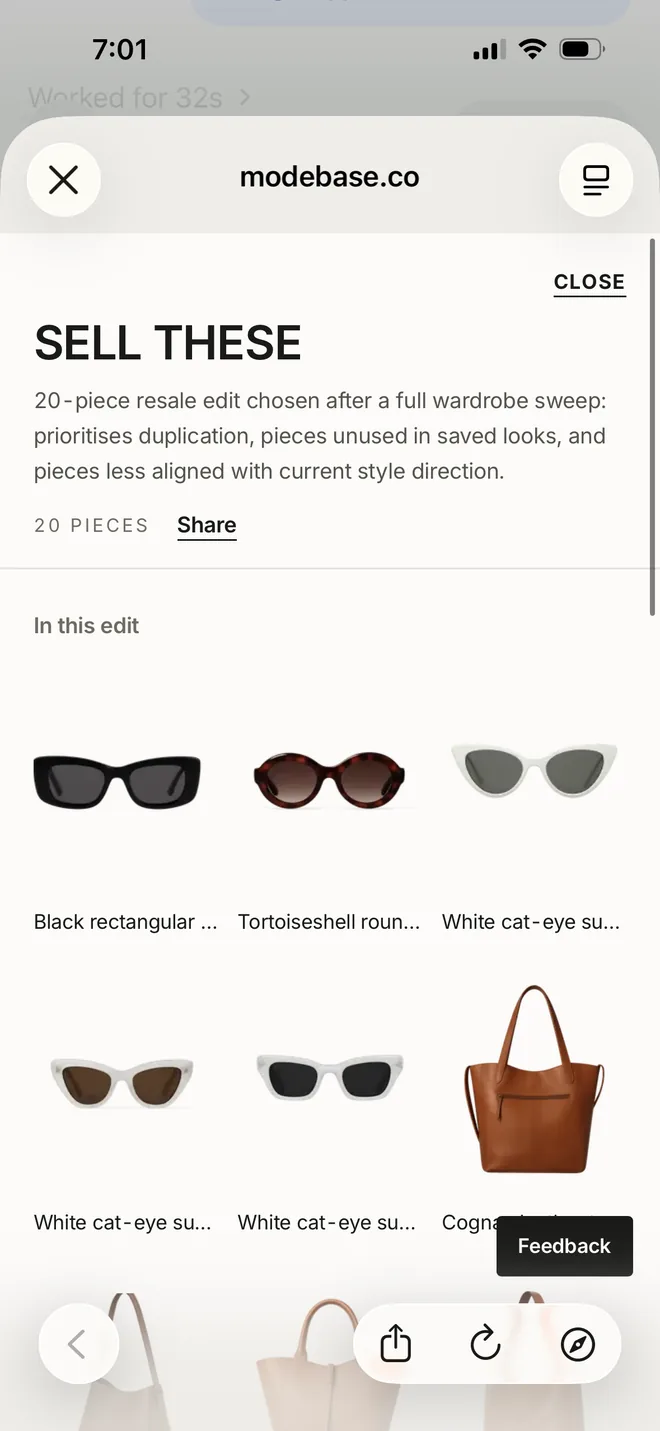
Most unworn clothes are not unworn because they are bad. They are forgotten, or we cannot see how to style them. That is a visibility problem, and it is what Modebase solves.
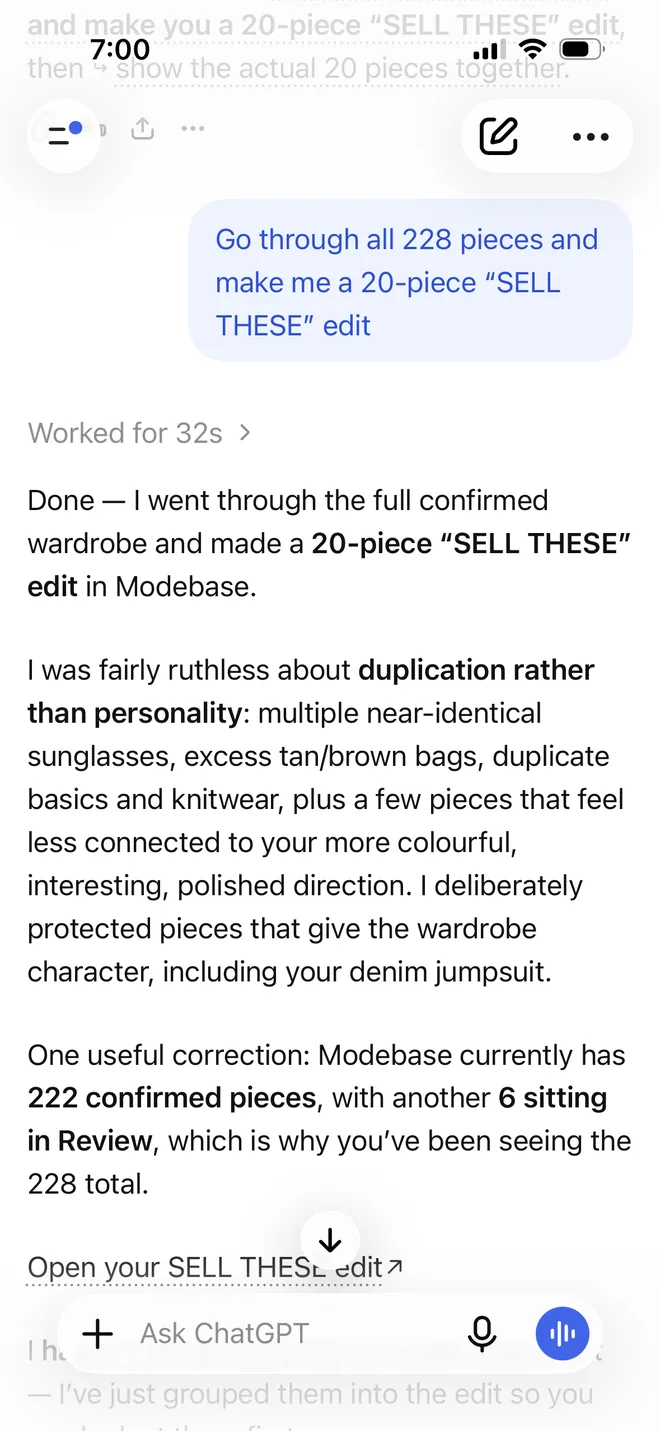
Upload photos of your clothes and Modebase catalogues every piece. Connect it to ChatGPT or Claude and you can ask things like:
What have I not worn in the last three months? Build me three outfits around those pieces.
And before you buy something new, it can check whether you already own something similar, and how often you actually wear it.
FAQ
What is the difference between sustainable and ethical fashion?
Sustainable fashion usually refers to environmental impact. Ethical fashion focuses on people: fair wages and safe working conditions. In practice the two overlap, and most people use the terms together.
Is sustainable fashion more expensive?
Buying new from sustainable brands often costs more upfront. But the most sustainable options, wearing what you own, repairing, swapping and buying second-hand, cost little or nothing.
Is fast fashion always bad?
The problem is less the garment and more how it is used. A cheap piece worn 100 times is a better outcome than an expensive one worn twice. The issue with fast fashion is that it is designed to be replaced quickly.
Are natural fibres more sustainable?
Not automatically. Cotton uses a lot of water, and some synthetics are made from recycled materials. Natural fibres do break down more easily and shed fewer microplastics, which is why interest in them has grown.
What should I do with clothes I no longer want?
Resell or swap them first. Donate only clean, wearable pieces to op shops, since damaged items cost charities money to dispose of. For worn-out textiles, look for a textile recycling program rather than your kerbside recycling bin.
Sources
- Waste report launched during fashion week (Monash University Sustainable Development Institute figures), Canberra Times
- Australia's textile waste problem, Clayton Utz
- Extending Product Lifetimes: WRAP's work on clothing durability, WRAP
- How to keep your unwanted clothing out of landfill, SBS
- What fashion is trending in Australia? Google Australia